
Building with AI
Building with AI
Practical notes on putting AI to work: strategy, engineering workflows, and what it takes to move from proof of concept to production. Every piece is also published on LinkedIn, where the discussion happens.
Latest post
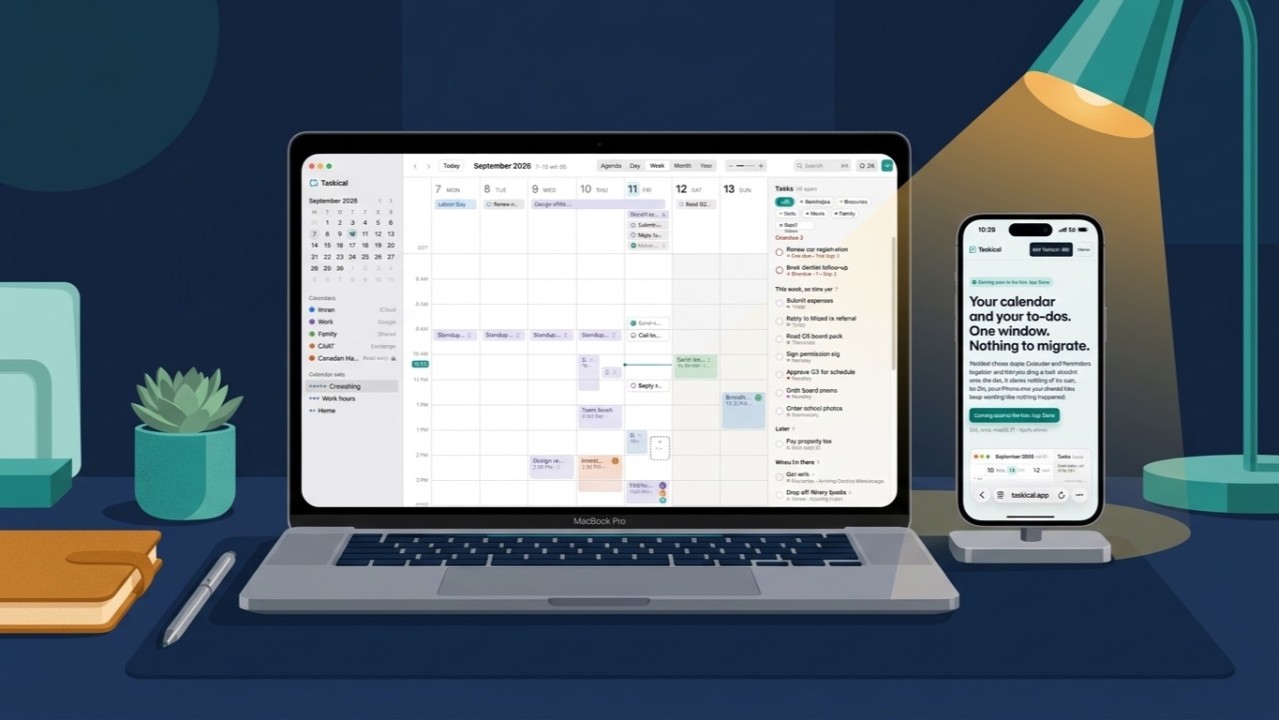
The App I Built Instead of Subscribing
I built a native Mac app from idea to App Store review in one week using Claude for design and GPT-6 Astra for code. Here are some lessons about closing workflow gaps with better tools, not more agents.
Don't Build the AI. Build What It's Allowed to Touch.
Most teams trying to bring an AI system to life start by building the AI. That is the expensive half, the fastest-moving half, and the half where you have no advantage.
What the Watermark Actually Measures
Anthropic started watermarking Claude's text this month, and a good part of my feed reacted like it had been caught. The reaction is more revealing than the announcement.
The Forward Deployed Engineer Is a Bet on Your Failed Pilots
FDE job postings grew roughly 729% in a year and the labs committed some $9 billion to deployment ventures. That is not a sign enterprise AI is working — it is a sign 95% of pilots stall at the integration wall, and someone gets paid to close the gap.
Multitasking Was Never the Problem
Attention residue research was right: switching between tasks you execute is a losing trade. Agentic AI changed the unit. Do the thinking serially, hand execution to agents, and parallelize only the waiting.
Your Backlog Is the Benchmark
Every model launch triggers the same one-shot ritual. The better evaluation method has been sitting in your issue tracker the whole time: your backlog, where closed items come pre-labeled with correct answers.
Software Engineering Isn't Solved. It Moved Upstream.
Loops promise to make planning optional, but a loop only terminates against a verifiable condition, and that condition is a specification. The durable engineering skills are moving upstream toward specification, verification and judgment.
Shadow AI is already inside your organization
Shadow AI costs enterprises $670K more per breach. What Canadian pension plans and financial institutions need to know and do now.
The two traps of enterprise AI
Most enterprise AI strategies start from one of two assumptions: get your data right first, or find high-value use cases. Both sound reasonable. Both are traps if you treat them as step one in a linear playbook.
The AI conductor era
The most productive workers in 2026 aren't the ones typing the fastest. They're the ones orchestrating the most AI agents.
If AI assisted development is so amazing, why aren't we seeing the gains?
The tools work. The gains don't show up. That's the uncomfortable reality of AI-assisted software development in the enterprise right now.
Why OpenClaw is a signal, not just a tool
Most people think of AI as a chatbot. OpenClaw represents a fundamental departure: a persistent, proactive agent that operates continuously, acquires capabilities dynamically, and meets users where they already are.
Harness engineering is not the bridge to citizen development
Harness engineering makes AI-assisted development reliable for professional engineers. That doesn't mean it makes enterprise software accessible to everyone. Citizen development and enterprise engineering coexist only with clear boundaries.
From Vibe Coding to Harness Engineering
How AI-assisted development evolved from vibe coding to spec-driven development to harness engineering in barely a year, and why the engineer's job is shifting from writing code to designing environments where agents write it well.
Stop Picking the "Right" AI Vendor
Why enterprises should optimize for flexibility and reversibility instead of trying to pick the perfect AI vendor in a market that shifts every few months.
Rethinking security in the age of AI and autonomous agents
The OpenClaw debate isn't really about one tool's security settings. It's exposing a fundamental tension: AI agents need freedom to be effective, but our security frameworks were built for predictability.
Introducing Cowork by Claude
Anthropic brings the power of Claude Code to non-technical users with Cowork, and what this means for AI tool companies and enterprise AI strategy.
AI strategy, agile waterfall, and spec driven development
Ideas on enterprise AI strategy, the return of upfront requirements in an agile world, and why specs have taken the place of code.
Agentic Code Through a Photographer's Lens: Part 2
Less than 6 months after my original post, not only has the technology improved dramatically, but the market has validated what many of us early adopters suspected: this represents a fundamental shift in how software gets built.
Building a RAG Pipeline: Lessons Learned and Best Practices
My journey building a RAG pipeline, highlighting lessons learned and best practices for enriching AI responses with relevant enterprise data.
Agentic Code Through a Photographer's Lens
Comparing the shift to AI-assisted coding to the transition from film to digital photography, and what I've learned putting agentic code editors through the paces.
Navigating the AI Landscape: A Guide for Businesses
How companies in regulated industries can take an incremental approach to AI adoption, from private chatbots to RAG systems, while managing security and privacy risks.
Project management in a world full of AI and automation
While automation has brought significant benefits to project management, it is important not to lose sight of the human dimension of this field.